Fishing can be a great way to relax and engage in an activity. However, as a fisherman it is important to know that fishing can negatively affect the environment in four main ways: overfishing, habitat destruction, abandoned fishing gear, and bycatch. So next time you are out fishing remember to follow catch limits, use less destructive fishing methods, clean up after yourself, and participate in techniques that reduce fishing bycatch.
Over Fishing
Over fishing is simply when fish are fished so much that their population decreases and even gets near the point of extinction. An example of this is when fishermen overfished cod so much that the area of Newfoundland Canada, which was formerly the world’s largest cod fishery, had estimated a decrease of cod biomass by over 90% in some areas. This causes prey of cod, like shrimp and snow crab, to increase in population through trophic cascade. Trophic cascade happens when large predators are removed, which causes prey population to increase.
Over Fishing Solution
Solutions to prevent over fishing include adding catch limits, which are limits to the amount of fish that you can keep for your own use. This has worked in the mid-Atlantic for species such as bluefish and flounder. If catch limits don’t rebound populations like for Atlantic cod, factors like rising water temperature may inhibit recovery.

Habitat Destruction
Habitat destruction can happen when fishermen use dredging for harvesting clams. Dredging uses a large metal scoop that drags along the ocean floor to pick up clams. Dredging also mixes up sediments along the seafloor, which causes them to degrade water quality and be dispersed through the water. This technique can also dig up essential burrowing worms from the sediments. Another reason why habitat destruction happens is because of seafloor trawling which is when equipment is dragged across the ocean floor to catch bottom-dwelling fish. This decreases the biomass and destruction of benthic species, which are animals that roam the bottom of a body of water. Also, this technique destroys corals, oysters, and sponges that form marine habitats.
Habitat Destruction Solution
Habitat destruction solutions are focused on new fishing methods that are less destructive. For example, studies on diver harvesting, when a diver swims along the bottom of the water and finds oysters, shows that the technique was less damaging to reef structures than traditional methods like dredging. Also, latter methods, like dredging, randomly harvest all oysters, even those that are dead on the reef. However, diver harvesting is more selective and only collects oysters that are commercially valuable. Finally, diver harvesting also was shown to increase the amount of oysters harvested per unit of fishing time.
Abandoned Fishing Gear
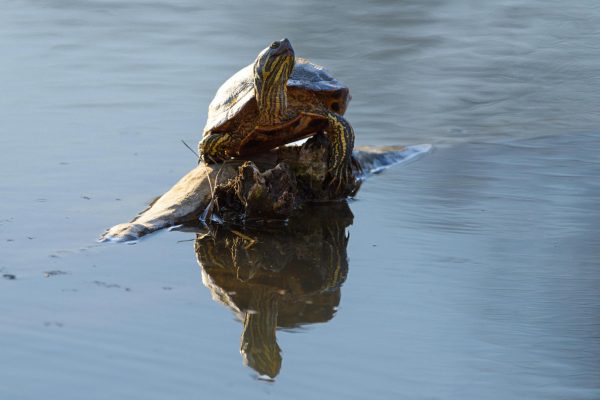
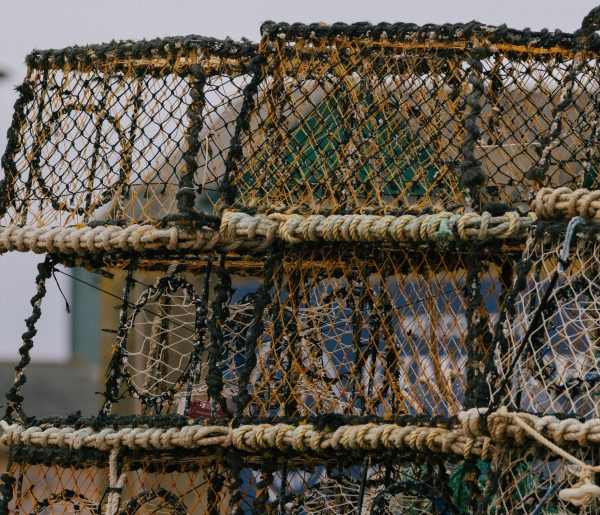
Abandoned fishing gear can be destructive when they become lost in the water because they continue catching animals, this action is known as ghost fishing. Gear from ghost fishing can trap tons of animals that aren’t being harvested or used. Fishing piers can be a site for ghost fishing because lures and lines can be wrapped around pilings, catching animals swimming by. An example of abandoned fishing gear affecting the environment is on Diamondback Terrapins. They inhabit salt marshes along the East Coast, also where people fish for blue crabs. The crabs are caught using a crab pot, which is a metal cage that’s dropped to the floor and tied to a buoy. When the buoys are detached from the crab pot, fishermen may not be able to find their trap and then terrapins swim into the pot because of the bait and get caught. Also, because terrapins are social animals and several turtles are in the pot, often more get caught in the pot. A pot in Georgia was found and contained more than 130 deceased turtles. Finally, the population of terrapins can be affected because female terrapins are bigger than males, so females often can’t fit in the opening of the pots. This results in males and younger turtles trapped and pushing the population towards older turtles and females.
Abandoned Fishing Gear Solution
Solutions to abandoned fishing gear include simply cleaning up after yourself on every fishing trip. Mistakes do happen however, but always try your best to not lose any fishing gear. Finally, there is a North American Net Collection Initiative (NANCI) that prevents ghost gear in the coastal waters of the Western United States, Mexico, and Canada.
Bycatch
Bycatch is when fishing practices catch non-targeted species. Longline fishing has examples of bycatch and is practice where miles of line, usually in the open ocean, has thousands of baited hooks. One line from this fishing method could have more than 2,500 hooks. Sea turtles, for example, are common to get caught via bycatch from longline fishing because they go to the surface to breathe. When they go to breathe they may take the bait on the lines, get hooked from the hooks lodging in their mouths, and they then drown from not being able to breathe. Also, some turtles are so big where their flippers can be caught and wrapped in line as they swim through them. Even marine animals like albatrosses can get caught in these lines and drown when they fly over the water and see the bait. Over the past twenty years, an estimated 85,000 sea turtles have died from bycatch. Also, 300,000 marine animals, 160,000 albatross, and 3 million sharks died to bycatch from fishing practices each year.
Next, many populations have declined and species become functionally extinct in many areas. Functionally extinct happens when species populations decrease to the point where they don’t play a significant role in their ecosystem anymore. For example, leatherback turtles consume hundreds of jellyfish daily and control their populations. Then, with the jellyfish’s major predators gone from bycatch, their population skyrockets in some areas.
Bycatch Solution
Solutions for bycatch include specific hooks that don’t get stuck in sea turtle’s mouths, adding bycatch reduction devices to crab pots, which are plastic rings that are attached to the openings. The bycatch reduction device makes the crab pot openings smaller, so terrapins stay out while blue crabs can still get in. Finally, one of the most successful stories in bycatch reduction has been the use of turtle excluder devices (TEDs) on shrimp trawlers in the Gulf of Mexico. Bycatch of Kemp’s ridley turtles by shrimp trawlers, when boats pull a net behind them through the water, was a significant factor of the turtle’s decline. Then, the TED, which is a large grate that can be attached to the inside of a net, and an opening in the net is placed next to it. With this, shrimp can easily pass through the gate while turtles can’t. Also, when the turtles come in contact with the grate, the opening in the net provides an escape route and the turtles can leave the net unharmed. Studies on the TEDs have shown that they reduce sea turtles bycatch by up to 97% in some cases.
I love fishing and I hope you do too, but you have to remember to practice safe fishing methods. Over fishing, habitat destruction, abandoned fishing gear, and bycatch are serious problems that we must work together to stop. Remember to follow catch limits, use less destructive fishing methods, pick up after yourself, and participate in techniques that reduce bycatch. All in all, love and enjoy fishing, but always remember to take care of the environment first, before you take care of your fishing gear.