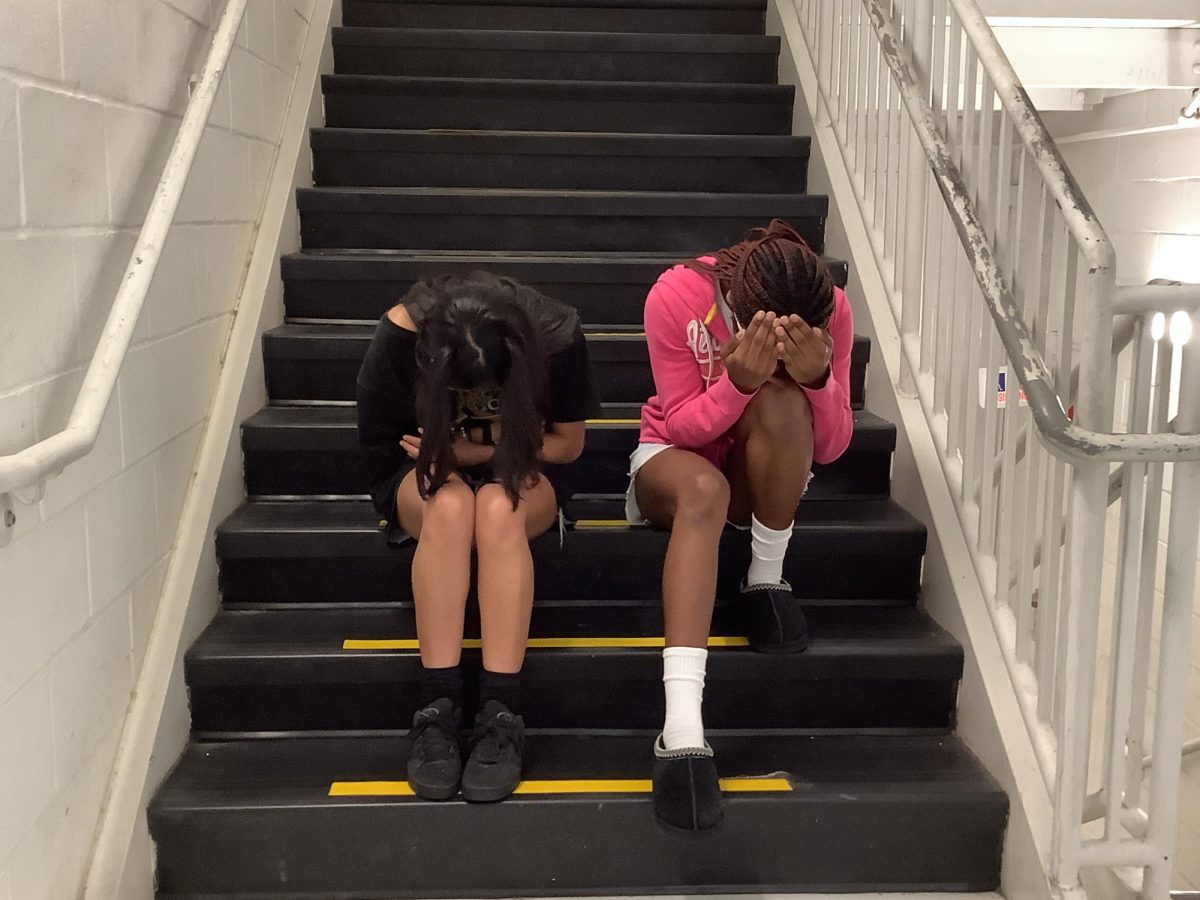
Between social media, beauty trends, and pressure to fit in, students start to feel overwhelmed.
Students compare grades, clothing, appearance, popularity, and even personalities every day. While other students appear confident on the outside, insecurities often hide behind smiles, laughter, and carefully edited social media posts. Studies show that teen mental health surveys suggest around 85-90% of teenagers struggle with self-consciousness or insecurities at some point during their youth.
Allison Zuber is an 8th grade student at Woodbridge Middle school, she brought up an astonishing point that girls and guys will be more insecure about different things, she said, “I feel like most guys are insecure about their height and it’s very noticeable, however girls focus more on their body image.”
Insecurity among students has become increasingly common in schools today. From academic pressure to unrealistic expectations online many students struggle with feeling “good enough.” Studies show that 73% of teenage girls and 69% of teenage boys struggle with self image. According to the American Psychological Association teenagers today also report high levels of stress and pressure much of it connected to school and social expectations.
Angie Del Cid is an 8th grade student who has struggled with insecurities, she talked about how students are feeling pressured to fit in, many students feel the need to fit in. She says “Some students feel pressured to fit in depending on the environment they’re in, many people influence their behaviors and how they view themselves.”
For many students, insecurity begins with comparison. Social media apps like Tiktok, instagram, and Snapchat constantly expose students to edited photos, trends, and unrealistic lifestyles. Students often compare themselves to people online without realizing how harmful it can become. Filters and beauty standards can make students feel pressured to look or act a certain way just to fit in.
Mrs. Douglas is an 8th grade language arts and creative writing teacher. She said, “Social media moves so quickly, like a TikTok trend, today can be dead by 10 P.M tonight, and there’s a bunch of pressure to be this perfect image and it plays heavily on the students’ population minds.”
However, insecurity is not only connected to appearance. Many students feel pressured to do well in school. Some students fear speaking up in class because they worry about being judged. Others compare grades, athletic ability, or popularity with classmates. This constant pressure can make school feel mentally exhausting rather than supportive.
Mr. Ahmed teaches 6th grade language arts and he said that “students see people doing things and they think that they need to do that, but guess what, they’ll do it when the right time comes.”
Experts say adolescence is one the most important periods for self-esteem development. During these years students are still discovering who they are while also trying to fit in socially. Because of this, even small comments or comparisons can deeply affect confidence.
Insecurity can also impact mental health. Students struggling with low self-esteem may isolate themselves, hide parts of their personality, or experience anxiety in social situations. Some students become quieter in class, while others pretend to be confident to avoid judgment from peers.
During 6th grade I used to be insecure about my self image I constantly shamed myself and put myself down, I was drowning in my own thoughts. I thought there was no way to escape and in all honesty there will be no escape but you can drown out the sounds. I’m now in the 8th grade and I’ve learned how to accept myself. I was mainly insecure about they way I looked, every time I looked in the mirror I felt a wave of disappointment. I felt like no matter what I did I wouldn’t fit in, I didn’t wanna go to school and I wanted to just hide away.
I started writing poems about how I felt and it cured a part of me, I listened to music, and talked with my friends. This helped me distract myself from reality and feeling the way I was, listening to music helped me turn off my mind, writing felt like I was expressing how I felt and it lifted the weight off my shoulder from holding it in.
Lastly, my friends made me feel better about myself. They never saw me the way I saw myself. On days I felt horrible about myself, I’d say one good thing each day, and suddenly I started to believe them. I was finally free, put some days those memories still linger in my head a constant reminder of the negativity that’s now dead.
Teachers and counselors believe schools can help students feel more accepted and supported. Creating positive environments where students feel safe expressing themselves may help reduce feelings of insecurity. Encouraging students’ kindness, inclusion, and mental health awareness can make a significant difference in students’ confidence levels.
Mason Wickinski, an 8th grade student, talked about schools not talking enough about mental health, he said, “They only host one event per year for it and they don’t talk enough about each thing they only cover the basics. They don’t talk about how it really affects you and makes you feel, they just talk about what it is.”
Although insecurity is common, many students do not openly talk about their feelings. Behind crowded hallways and social media posts, countless students are fighting silent battles with confidence and self-worth every day. By having more honest conversations about these struggles, schools can remind students that they are not alone.
In a world filled with comparison and pressure, sometimes the most important thing students can hear is that they do not have to be perfect to be accepted.